
Yes, you can train for a half marathon in eight weeks, but only if you’re already running 15 to 20 miles per week comfortably and have a solid base of at least 3 to 5 miles per continuous run. This compressed timeline works for experienced runners who need a structured push toward race day, not beginners starting from the couch.
The plan ahead gives you a complete weekly schedule that builds from your current fitness to race-ready conditioning across those eight weeks. You’ll follow four running days, two cross-training sessions, and one full rest day each week. Your long run will grow gradually, peaking at 12 miles before you taper during the final two weeks leading to your 13.1-mile race.
Sarah, a runner from Portland, came to this exact plan last year after completing a 10K. She was already logging about 18 miles weekly and wanted a fall half marathon without committing to a traditional 12 or 16-week buildup. Eight weeks felt tight but doable. She learned quickly that the timeline left zero room for skipped workouts or ignoring recovery. Every run mattered.
That’s the reality of an accelerated training window. You’re compressing what many runners spread across three or four months into two. The structure protects you, but only if you respect your starting point and trust the taper when your brain tells you to do more.
What You Need Before You Start
Your Current Running Base
Before you dive into this eight-week plan, let’s be honest about where you need to start. This compressed timeline isn’t for complete beginners, it’s designed for runners who can already cover 3 to 5 miles comfortably without needing to walk. If you’re currently logging at least 9 miles per week and those runs feel manageable rather than exhausting, you’ve got the minimum foundation.
That said, having the minimum base and having the ideal base are two different things. This plan works best if you’ve been consistently running 15 to 20 miles weekly for at least a month before you start week one. You should already have a good base running 15-20 miles per week and be reasonably close to goal pace during your regular training runs. If your easy pace right now is drastically slower than what you hope to run on race day, eight weeks won’t give you enough time to safely bridge that gap.
Think of this plan as a focused sharpening tool rather than a complete transformation program. You’re not building a runner from scratch in two months, you’re taking an existing runner and preparing them for 13.1 miles. The plan assumes your body already knows what it feels like to run regularly, your feet are conditioned to the impact, and you understand the difference between productive discomfort and warning-sign pain.
Essential Gear and Equipment

You don’t need a garage full of expensive equipment to run a half marathon, but a few key items will make your training safer and more comfortable. Here’s what matters:
- Quality running shoes fitted to your gait and replaced every 300-400 miles
- Moisture-wicking shirts and shorts that prevent chafing on long runs
- A handheld water bottle or hydration belt for runs over 60 minutes
- Sports watch or phone app to track distance and pace (optional but helpful)
- Anti-chafe balm for areas prone to rubbing
Start with shoes that fit properly and clothing that keeps you dry. Those two items prevent most common discomfort issues. If you’re already running 9 miles per week, you probably own suitable shoes, but check the tread and cushioning. Worn-out shoes increase injury risk when you ramp up mileage.
The hydration piece becomes non-negotiable once your long runs hit 8 miles or longer. You’ll lose too much fluid through sweat to wait until you finish. A simple handheld bottle works fine and costs less than fancy vests. Save the premium gear for after you cross the finish line and decide you’re hooked.
Nutrition and Recovery Tools
Proper fueling and recovery will make or break your 8-week plan. Start with simple nutrition tips: eat a carb-focused meal two to three hours before long runs and refuel within 30 minutes after. Keep a water bottle handy throughout the day, aim for pale yellow urine as your hydration gauge. During runs over 60 minutes, carry water or plan a route with fountains.
Recovery tools don’t need to be fancy. A foam roller helps release tight muscles after hard workouts, especially in your calves, quads, and IT bands. Roll slowly over sore spots for 30 to 60 seconds. Ice baths aren’t necessary, but elevating your legs for 10 minutes post-run reduces swelling. Listen to soreness, mild muscle fatigue is normal, but sharp pain means you need an extra rest day.
Safety and Stop Conditions

An 8-week timeline compresses what many runners spread over twelve to sixteen weeks, which means the margin for error shrinks considerably. This accelerated schedule demands that you stay alert to your body’s signals and recognize when pushing through discomfort crosses into dangerous territory.
The most common mistake runners make on compressed plans is confusing normal training fatigue with the early warnings of injury. Muscle soreness that fades within a day or two is expected, but sharp pain during a run, pain that worsens as you continue, or discomfort that persists for several days signals a problem. Similarly, excessive fatigue where you feel drained before workouts even begin, disrupted sleep patterns, or a resting heart rate elevated by more than ten beats per minute above your normal baseline all point to overtraining.
The compressed nature of this plan increases your risk for stress fractures and soft tissue injuries, particularly if you skip the prerequisite fitness level or try to compensate for missed workouts by doubling up. Never attempt to “make up” a missed long run by adding the miles to another workout. Instead, continue with the next scheduled session and accept that occasional gaps won’t derail your overall progress.
Pay special attention during weeks five and six when mileage peaks. This is when accumulated fatigue reaches its highest point before the taper begins. If you notice multiple warning signs converging during this phase, taking an extra rest day or replacing a run with gentle cross-training preserves more fitness than pushing into injury and losing weeks of training. The plan builds in recovery time, but only if you actually rest on those designated days rather than adding extra activities that prevent your body from adapting to the training load.
Your 8-Week Training Schedule: Week by Week
Weeks 1-2: Building Your Foundation
The first two weeks of your 8-week half marathon plan aren’t about pushing limits, they’re about establishing consistency and letting your body adapt to the training rhythm. If you’re already running 9 miles per week comfortably, these opening weeks build on that foundation without overwhelming you.
During Week 1, you’ll run four days: two easy 3-mile runs at a conversational pace, one 4-mile run at the same easy effort, and your first long run of 5 miles on the weekend. The two cross-training days might include cycling, swimming, or strength work, anything low-impact that keeps you active without pounding your legs. Take your rest day seriously; it’s when your muscles actually rebuild stronger.
Week 2 follows the same structure but nudges the volume slightly higher. Your easy runs extend to 3.5 miles, your mid-week run stretches to 4.5 miles, and your weekend long run reaches 6 miles. You’re adding roughly 10 percent to your total weekly mileage, which prevents the sharp jumps that lead to injury.
The key during these foundation weeks is nailing the easy pace. You should be able to chat with a running partner or hum a song without gasping. If you’re breathing hard on your easy days, you’re going too fast and robbing yourself of the recovery that makes harder weeks possible. Log each run, notice how you feel, and trust that this measured approach is setting you up for the intensity ahead.
Weeks 3-4: Increasing Intensity
By week three, your body has adapted to the routine. Now it’s time to add the challenges that’ll make you faster and stronger on race day.
During weeks three and four, you’ll push your weekly long run to eight miles, then ten. These aren’t casual jogs anymore. Run them at a comfortable, conversational pace, but expect to feel genuinely tired by the end. That fatigue means you’re building the endurance your legs need for 13.1 miles.
The biggest shift in this phase is introducing speed work. One day per week, you’ll tackle intervals or tempo runs. Start with something manageable: six to eight 400-meter repeats at your goal race pace, with equal recovery jogs between each. If you’re not sure what pace to target, use a pace chart to dial in the right speed for your current fitness level. These faster efforts train your body to hold race pace without redlining.
Keep your easy runs truly easy. They should feel almost too slow, leaving you fresh enough to nail the hard workouts. By the end of week four, you’ll notice your legs handling higher volume and faster paces with less struggle. That’s the adaptation you’re chasing.
Weeks 5-6: Peak Training
Weeks five and six represent the most demanding stretch of your training plan. This is where your body adapts to the full stress of half marathon preparation, and your long run climbs to its 12-mile peak. During week five, you’ll tackle 10 miles on your long run day, pushing your endurance further than you’ve gone so far. Week six brings the full 12-mile effort, the longest single run you’ll complete before race day.
These peak weeks require your total focus on recovery. You’re asking more of your muscles, joints, and cardiovascular system than at any other point in the plan. Sleep becomes non-negotiable; aim for eight hours nightly to allow proper tissue repair. Your nutrition window after long runs matters now more than ever. Refuel within 30 minutes of finishing with a mix of carbohydrates and protein to kickstart recovery.
Don’t skip your rest day during this phase, even if you feel strong. Your body builds fitness during recovery, not during the run itself. The two cross-training days should remain low-impact and relatively easy. This isn’t the time to set personal records in the pool or push hard on the bike.
Watch for signs you’re overreaching: persistent fatigue, elevated resting heart rate, or legs that feel heavy on easy runs. If these appear, take an extra rest day. Missing one workout to prevent injury beats losing two weeks to recover from pushing through warning signs you ignored.
Weeks 7-8: The Taper
After six weeks of building endurance and pushing your limits, the final two weeks flip the script entirely. Your primary job now is to do less, not more, and for many runners, that’s the hardest part of the whole plan.
During week seven, you’ll cut your total mileage by about 30 to 40 percent. That 12-mile peak long run you conquered? This week scales back to 8 or 9 miles. Your mid-week runs shrink to 3 or 4 miles each, and you’ll still include one easy-paced session. Week eight reduces volume even further: your final long run before race day should be no more than 5 or 6 miles, typically scheduled about 10 days out from the half marathon. The last few days before the race involve only short, easy shakeout runs or complete rest.
The taper exists because adaptation happens during recovery, not during the workout itself. All those miles you logged damaged muscle fibers and depleted glycogen stores. Reducing volume now gives your body time to repair stronger, replenish fuel reserves, and clear accumulated fatigue. You won’t lose fitness in two weeks, but you will arrive on race day fresh instead of tired.
Mentally, use this time to visualize your race strategy: where you’ll start conservatively, how you’ll manage the middle miles, and when you’ll push in the final stretch. Review your fueling plan and confirm your gear is ready. Channel any nervous energy into preparation rather than extra miles, trust that the work is already done.
Understanding Your Weekly Workout Types
Your schedule includes four distinct workout types, each serving a specific purpose in building your half marathon fitness.
Easy runs form the backbone of your training, these shorter weekday runs should feel comfortable enough to hold a conversation. They develop aerobic endurance without taxing your recovery system. Aim for a pace that’s 60 to 90 seconds slower than your target race pace.
Long runs happen once weekly, gradually building from around 6 miles to the 12-mile peak. These teach your body to sustain effort over extended periods and mentally prepare you for race distance. Keep the pace relaxed, finishing feeling strong matters more than speed.
Speed work appears on one weekday, typically as intervals, tempo runs, or fartlek sessions. These faster-paced efforts improve your lactate threshold and running economy. For example, you might run six 800-meter repeats at goal pace with recovery jogs between.
Cross-training days feature low-impact activities like cycling, swimming, or strength training. These maintain cardiovascular fitness while giving your running muscles and joints a break from pounding the pavement. Choose activities you enjoy, consistency beats perfection here.
Cross-Training and Rest Days

Your body builds strength during recovery, not during workouts themselves. That’s why this 8-week plan dedicates three days each week to non-running activities, two for cross-training and one for complete rest. These days aren’t filler; they’re strategic tools that reduce injury risk while maintaining your aerobic fitness and strengthening the muscles running alone doesn’t fully develop.
Cross-training days should feel like active recovery. You’re working, but not taxing the same joints and muscles that absorb impact during your runs. The best options complement running mechanics without adding stress to your knees, ankles, and hips:
- Swimming or pool running, builds cardiovascular endurance with zero impact
- Cycling, strengthens quads and glutes while giving your joints a break
- Mobility workouts improve range of motion and address muscle imbalances
- Yoga or Pilates, enhance core stability and flexibility crucial for running form
- Elliptical training, mimics running motion with reduced impact
Keep these sessions moderate in intensity, around 30 to 45 minutes. You should finish feeling refreshed, not depleted. If you’re breathing too hard to hold a conversation, you’re pushing too hard for a cross-training day.
Your weekly rest day is non-negotiable. Schedule it the day after your long run or toughest workout. Complete rest means no structured exercise, just walking, light stretching, or foam rolling if needed. Your muscles repair and adapt during this downtime, making you stronger for the next week’s training. Skipping rest days to “catch up” on missed runs backfires; it increases injury risk and leads to burnout exactly when you need consistency most.
How to Know You’re Ready for Race Day
You’re ready for race day when your body and mind align with the work you’ve put in. Physical readiness shows up in tangible ways: you completed that 12-mile peak long run without falling apart, your recovery runs feel genuinely easy, and you can hold race pace for sustained intervals without gasping. Mental readiness is equally important, you trust the taper, you’ve visualized crossing that finish line, and you’re excited rather than terrified.
Here’s what successful completion of the eight weeks looks like:
- You finished at least 90% of the scheduled workouts, including all long runs above 8 miles
- Your easy pace feels conversational and controlled, not like a struggle
- You wake up without lingering aches, tightness, or sharp pains
- You can run your goal race pace for 20 to 30 minutes comfortably
- You’ve tested your race day nutrition and gear during long runs with no issues
During race week, resist the urge to cram in extra miles. Your fitness is already banked. Focus on staying loose with easy 20- to 30-minute shakeout runs, sleeping well, and eating familiar foods. Lay out your race outfit the night before and double-check your bib number and start time.
The nerves you feel aren’t a warning sign, they’re proof you care about this goal. Channel that energy into confidence. You’ve run the miles, survived the early mornings, and pushed through tough workouts. Trust what you’ve built over these eight weeks.
Common Questions About 8-Week Half Marathon Training
Is eight weeks really enough time to train for a half marathon? That’s the question I hear most often when runners discover this compressed timeline. The honest answer: it depends entirely on where you’re starting from. If you’re already running 15 to 20 miles per week comfortably and can handle 3 to 5 miles without struggle, eight weeks gives you sufficient time to build up to 13.1 miles. Your body has the aerobic base; the plan simply teaches it to sustain effort over a longer distance. However, if you’re starting from zero or barely logging a few miles weekly, this timeline is too aggressive and puts you at serious injury risk.
What should I do if I miss a workout during the eight weeks?
Skip it and continue with the next scheduled session rather than trying to make it up. Doubling up workouts or cramming missed mileage into later weeks overloads your body and increases injury risk.
How do I know if I’m running at the right pace during training?
Your easy runs should feel conversational, you could chat in full sentences without gasping. Long runs sit at about 60-90 seconds slower per mile than your goal race pace, while speed sessions push closer to or slightly faster than target pace.
When should I eat before my long runs?
Aim to finish a light meal 2-3 hours before you start, or have a small snack 30-45 minutes out. Your stomach needs time to settle, and you want easily digestible carbs for fuel without feeling heavy.
Can I still follow this plan if I have to take a rest week in the middle?
One unplanned rest week during weeks 1-4 won’t derail you, but missing a week during the peak phase (weeks 5-6) makes finishing the plan safely much harder. If you need extended time off due to illness or injury, consider pushing your race date back rather than rushing through.
Another concern runners raise: what if the weekly long run feels too hard? If you’re struggling to complete the scheduled distance, your baseline fitness likely isn’t where this plan requires. That 12-mile peak long run in week six assumes you’ve built gradually from a solid foundation, not from scratch. Trying to push through when your body isn’t ready doesn’t make you tougher; it makes you injured.
The taper also confuses people. Why cut back when you’re finally feeling strong? Those final two weeks at reduced volume let your muscles repair fully and your glycogen stores max out. You’re not losing fitness, you’re priming your body to perform at its best when it actually matters.
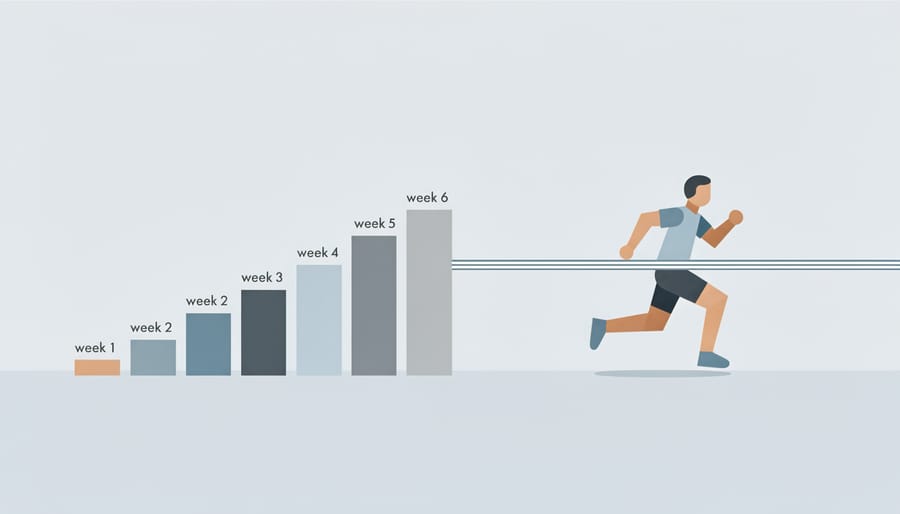
You’ve got the plan, you’ve got the knowledge, and now it’s time to lace up and commit. Eight weeks might feel tight, but runners prove every season that it’s enough time when you show up consistently. Missing a workout won’t derail you, skipping three in a row might. Trust the structure, especially during the taper when your instinct screams to do more.
Sarah, a busy accountant from Portland, ran her first half last fall using this exact timeline. She missed two speed sessions due to work travel but nailed her long runs and crossed the finish line smiling. Her advice? “Stop overthinking every mile. Just follow the plan and your body will adapt.”
After race day, take a full week off running. Let your legs recover completely, then decide what’s next. Maybe you’ll chase a faster time, step up to a full marathon, or simply enjoy maintenance running without a goal looming. The discipline you’ve built over these eight weeks transfers to whatever challenge you pick next. You’ve done harder things than this, now go prove it to yourself on race day.