
Registration costs for the Toronto Waterfront Marathon vary based on which distance you choose and when you register, though specific 2026 pricing hasn’t been publicly released and the marathon distance is currently sold out. The three main factors that influence your total cost are the race distance (Marathon, Half Marathon, or 5K), your registration timing (early bird rates versus standard pricing), and whether you add travel packages or book everything independently.
What you get for your entry fee provides solid value: a finisher medal, ASICS souvenir shirt, official race bib, access to the Coopah Run Coaching App, on-course hydration and energy products from Organika and Hornet, professional timing by Sportstats, and post-race recovery food. Beyond the entry fee itself, budget-conscious runners should plan for additional expenses like accommodation (especially if you’re traveling to Toronto), parking or transit to reach the 8:00 a.m. start on Yonge Street, pre-race meals, and any gear you’ll need for race day.
Since the 42K is sold out for 2026, runners eyeing future editions should understand that marathon entry typically opens months in advance, with prices gradually increasing as race day approaches. The half marathon and 5K options may still be available, giving you a chance to experience this lakefront course while planning ahead for next year’s full marathon.
Toronto Waterfront Marathon Entry Fees by Race Distance
The Toronto Waterfront Marathon gives runners three distance options to choose from, each designed to accommodate different experience levels and goals. The full 42K Marathon is the flagship event, starting at 8:00 a.m. on Yonge Street near Elm Street and finishing on Bay Street just north of Queen Street. The Half Marathon offers the same scenic waterfront route over a shorter distance, while the 5K provides an accessible option for beginners or those wanting to experience race day without the full marathon commitment.
Registration pricing varies by distance and timing, with races typically offering early-bird periods that reward runners who commit months in advance. The most budget-friendly approach involves registering as soon as registration opens, though the exact windows and pricing change year to year. Since the marathon is currently sold out, runners interested in the full distance should explore charity entry options or plan ahead for future years.
To find current availability and pricing for the remaining distances, check the official Toronto Waterfront Marathon website directly. The race organizers update registration status regularly and announce when new spots become available through deferrals or cancellations. Signing up for email notifications ensures you’ll know immediately if the sold-out 42K reopens or when registration launches for next year’s event.
What’s Included in Your Registration Fee

Your registration fee covers far more than just entry to the race. Understanding what’s included helps you appreciate the value and plan what you’ll need to bring or purchase separately.
Every participant receives a comprehensive package of race-day essentials and perks designed to support your performance and celebrate your achievement:
- Marathon Finisher Medal, A tangible reminder of your accomplishment waiting for you at the finish line on Bay St.
- ASICS Souvenir Shirt, High-quality race apparel to commemorate your participation
- Official Race Bib, Your unique identifier with timing chip technology for accurate results
- Coopah Run Coaching App Access, Digital training support to help you prepare effectively
- On-Course Hydration and Nutrition, Organika Hydration stations and Hornet Energy products strategically placed along the route
- Sportstats Timing, Professional chip timing ensuring precise tracking from your 8:00 a.m. start through the finish
- Post-Race Recovery Food, Nourishment waiting at the finish area to support your recovery
The coaching app access stands out as particularly valuable if you’re new to marathon distances or looking to improve your time. It provides structured training plans tailored to your fitness level, helping you arrive at that Yonge St. start line prepared and confident.
The on-course support ensures you won’t need to carry all your own nutrition and hydration, lightening your load during those 42 kilometers. Combined with the professional timing system, you’ll have accurate split times and official results to track your progress throughout the race and compare against future performances.
These inclusions eliminate several costs you’d otherwise face separately, from purchasing your own race-day fuel to buying commemorative gear after the event. The package delivers genuine value beyond the entry fee itself.

Factors That Affect Toronto Waterfront Marathon Costs
Registration Timing and Price Tiers
Most major marathons structure their registration around tiered pricing windows that open months before race day. The Toronto Waterfront Marathon typically follows this industry-standard approach, offering early-bird rates when registration first launches and gradually increasing prices as the event date approaches.
Early registrants benefit from lower fees and guaranteed entry before the race reaches capacity, the 2026 marathon sold out well before race day, demonstrating the value of committing early. Regular and late registration periods follow, with each tier reflecting higher costs as availability decreases and demand intensifies.
Race organizers use this tiered system to manage logistics and reward runners who plan ahead. When you register affects more than just cost, it influences your training timeline, travel planning, and stress level. Early commitment gives you months to prepare properly, book affordable accommodation near the Yonge Street start line, and lock in your spot before sellout.
Check the official Toronto Waterfront Marathon website regularly for current pricing and registration windows. The site posts exact rates for each distance and tier, along with registration opening dates. Sign up for race notifications to catch early-bird windows when they launch.
Distance Selection Impact
The marathon will always cost more than the half marathon, which costs more than the 5K, that’s the standard pricing ladder across most races. Longer distances mean bigger organizational costs, more aid stations, extended road closures, and longer medical support coverage.
But price differences aren’t massive. For most runners, the decision between distances should focus on your training commitment and goals rather than trying to save on entry fees. Training for a full marathon demands roughly 16-20 weeks of consistent base-building, long weekend runs gradually extending to 20+ miles, and a serious time investment each week. A half marathon requires about 10-12 weeks of structured training with peak long runs around 10-12 miles, manageable for many runners with busy schedules. The 5K needs minimal distance-specific preparation if you’re already running regularly.
Your distance choice also shapes race day itself. Marathon runners start at 8:00 a.m. and typically finish anywhere from three to six hours later, while half marathoners wrap up in 90 minutes to three hours. The 5K crowd runs later in the morning and finishes in under an hour. If you’re traveling to Toronto for the race, that timeline difference affects your whole weekend schedule.
Consider your running experience honestly. If you’ve never raced beyond 10K, jumping straight to the marathon distance rarely ends well, and the slightly lower half marathon fee won’t compensate for undertrained misery at kilometer 35. A pace chart guide helps you set realistic half marathon expectations before committing. Pick the distance that matches where you are now, not where you wish you were.
Charity and Guaranteed Entry Programs
Charity partnerships offer a valuable alternative when standard registration closes. Several Toronto-based organizations secure blocks of race entries, guaranteeing your spot in exchange for fundraising commitments. This route typically requires raising funds for causes like children’s hospitals, health research, or community programs.
Fundraising minimums vary by organization and usually reflect the race distance, marathon entries generally carry higher commitments than half-marathon or 5K spots. Most charities provide support through fundraising toolkits, donation platforms, and team training runs. Check the official Toronto Waterfront Marathon website for current charity partner listings and reach out directly to organizations to confirm their specific requirements and available entries before committing.
Beyond the Entry Fee: Additional Race Day Expenses
Travel and Accommodation
Book your Toronto accommodation early, demand spikes during marathon weekend, especially near the start and finish lines. The start line on Yonge St. near Elm St. sits in the downtown core, putting you close to hotels along Yonge Street, Church Street, and the Eaton Centre area. The finish line on Bay St. just north of Queen St. is walkable from most downtown hotels, typically under 20 minutes.
Look for hotels offering runner-friendly amenities like early breakfast service before the 7:00 a.m. arrival requirement, and book six to nine months ahead for better availability. Consider neighbourhoods like the Entertainment District, Financial District, or Harbourfront, all within easy walking distance of both race locations.
For transportation, Toronto’s TTC subway system runs early on race morning, with Union Station serving as a central hub. If you’re driving, research parking facilities near the start area in advance, as street parking fills quickly. Many runners staying outside downtown use the subway or arrange rideshares to avoid race-day traffic and parking challenges.
Race Day Logistics
Race morning logistics require careful planning and a realistic budget beyond your entry fee. With the 42K starting at 8:00 a.m. and all runners needing to reach their assigned corrals by 7:00 a.m., you’ll want to arrive earlier to account for security checks and last-minute prep.
Transit is often the most economical choice, but expect crowded subway cars filled with fellow runners. If you’re driving, downtown Toronto parking costs vary significantly by location and day of week, so research garage rates near Yonge St. and Elm St. ahead of time. Many runners prefer booking accommodation within walking distance to eliminate this stress entirely.
Pre-race nutrition matters more than most people realize. You’ll need breakfast before that early start, whether from your hotel, a nearby cafe, or portable options you’ve packed. Following solid running nutrition tips and avoiding common pre-run mistakes can save your race. Budget for whatever fueling strategy you’ve practiced during training, plus a safety margin for unexpected race morning needs.
Training and Gear Investment
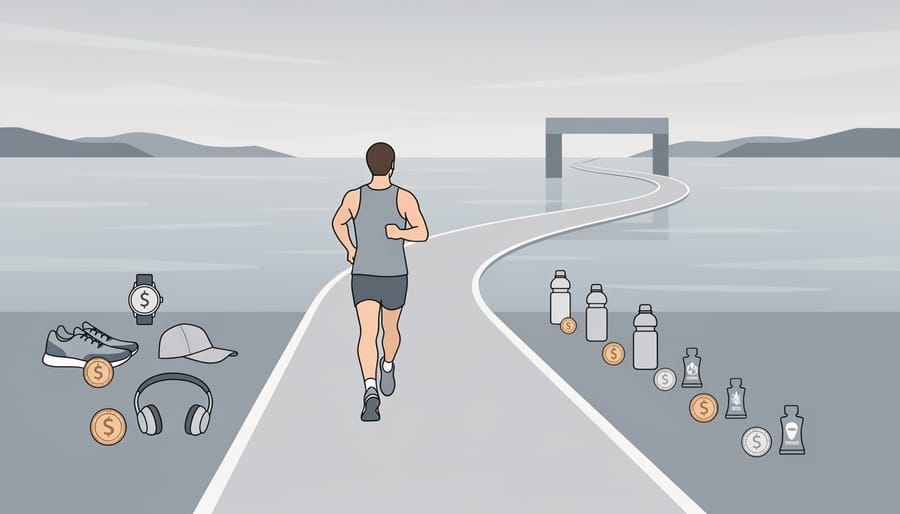
Preparing for the Toronto Waterfront Marathon extends beyond your entry fee. Budget for quality running shoes, which you’ll likely need to replace partway through a typical 16-20 week training plan. Training nutrition, energy gels, electrolyte drinks, and recovery snacks, adds up when you’re logging long weekend runs. Many runners invest in moisture-wicking apparel, a running watch or GPS device, and accessories like anti-chafe balm or foam rollers. While your registration includes access to the Coopah Run Coaching App, some participants opt for personalized coaching programs or join local running clubs for structured group training. The total investment varies widely based on what you already own versus what you need to purchase new, but factoring these preparation costs into your overall marathon budget helps avoid surprises.
DIY Registration vs. Race Package Deals
When you’re ready to commit to the Toronto Waterfront Marathon, you’ll face a choice: register independently and book everything separately, or purchase an all-in-one race package that bundles registration with accommodation and possibly transportation. Each approach has distinct advantages depending on your budget, timeline, and travel preferences.
DIY registration gives you complete control over every aspect of your race weekend. You select your own hotel based on proximity to either the Yonge St. start line or the Bay St. finish line, choose accommodation that fits your specific budget, and arrange transportation on your own schedule. This approach works particularly well for local runners or those who have family and friends in Toronto. You can also tailor your pre-race routine exactly how you want it, whether that means arriving several days early to explore the city or flying in the night before.
Race packages, offered through various travel companies and sometimes through official race partners, bundle your entry fee with hotel stays near the course, and may include perks like race expo transportation, breakfast vouchers, or group meet-ups. These packages simplify planning considerably, especially for out-of-town runners juggling first marathon training alongside travel logistics.
Pros
- DIY registration typically costs less overall since you avoid package markups and bundling fees.
- You maintain complete flexibility to change hotels, adjust your itinerary, or modify plans as your training progresses.
- Package deals eliminate the stress of coordinating multiple bookings and guarantee race-convenient accommodation.
- Bundled options often include extras like shuttle service to the start line and post-race celebration access.
Cons
- DIY requires more time researching, comparing options, and managing separate bookings for registration, hotels, and transport.
- Popular hotels near the course sell out quickly when booked independently, especially close to race weekend.
- Package deals generally cost more upfront than piecing together the same components yourself.
- Bundled packages lock you into specific hotels and dates with limited flexibility if your plans change.
The right choice depends on your priorities. If you value saving money and want maximum control over where you stay and when you arrive, DIY registration makes sense. If convenience matters more and you prefer having everything arranged in one transaction, a race package might justify the premium. Either way, book early since both individual hotel rooms and package deals near the start area on Yonge St. tend to fill up months before the 8:00 a.m. race start.
How to Find Current Toronto Waterfront Marathon Pricing
The most reliable way to get accurate pricing and registration details is to go straight to the source. Since the 2026 marathon is currently sold out, staying informed about future registration windows and waiting list opportunities is critical.
Start by bookmarking the official Toronto Waterfront Marathon website and checking it regularly. Race organizers post all registration dates, pricing tiers, and entry options there first. Here’s how to stay informed and secure your spot when registration opens:
- Visit the official race website and navigate to the registration page to check current availability for all three distances.
- Sign up for the race email newsletter to receive announcements about registration opening dates, early-bird pricing windows, and sold-out distance updates.
- Review the refund and deferral policies carefully before committing, as these vary between race distances and registration periods.
- Check if a waiting list exists for sold-out distances, and add your name if you’re flexible with your race plans.
- Verify all payment methods accepted and ensure your transaction goes through the official site, not third-party resellers.
Social media channels for the race also share real-time updates about registration status changes. Follow their accounts for immediate notifications if spots open up due to deferrals or cancellations.
Be wary of third-party registration sites that charge markup fees or claim to have entries when the official race is sold out. Stick with the official platform to avoid scams and ensure your registration is legitimate. If you’re considering a charity entry for guaranteed access, contact the race’s official charity partners directly rather than going through unofficial intermediaries.
DIY vs Hiring a Pro
Registering for the Toronto Waterfront Marathon yourself is straightforward once registration opens, typically involving a simple online form and payment through the official race website. Most runners handle their own entry without needing professional assistance, as the process mirrors any major marathon registration. The main advantage is direct control over your registration timing and cost savings, since you pay only the entry fee without any service markup.
However, some runners work with race travel companies or running tour operators who handle registration as part of a complete package. These services bundle your entry with hotel bookings near the start line on Yonge Street or finish line on Bay Street, transportation logistics, and sometimes group training or sightseeing activities. The trade-off is higher overall cost in exchange for convenience and a curated experience, which can be valuable if you’re traveling from out of province or internationally and want support coordinating all the moving pieces.
For most runners, DIY registration makes sense financially and gives you flexibility in choosing your own accommodation and travel arrangements. Professional packages suit those who value turnkey planning or prefer traveling with a guided running group, but the core race experience remains identical regardless of how you register.
Frequently Asked Questions
When does registration typically open for the Toronto Waterfront Marathon?
Registration timing varies by year, with races often opening registration several months in advance. The 2026 marathon is currently sold out, so runners interested in future events should monitor the official race website and sign up for email notifications to catch the next registration window early.
Are there refunds if I can’t participate after registering?
Refund and deferral policies vary by event and are typically outlined during the registration process. Check the official race terms and conditions before completing your registration, as many marathons have strict no-refund policies but may offer deferral options in certain circumstances.
Can I transfer my race entry to another person?
Transfer policies differ among racing events and are set by the organizers. Review the official registration terms for current transfer rules, as some races allow transfers for a fee while others prohibit them entirely for timing and safety reasons.
What payment methods are accepted for registration?
Most major marathons accept credit cards and debit cards through their online registration platforms. Specific payment options are displayed during the checkout process on the official race website.
Since registration logistics change from year to year, your best approach is always checking the official Toronto Waterfront Marathon website directly. They’ll have the most current information about pricing tiers, available distances, payment options, and any special registration periods. Sign up for their mailing list to receive updates about future registration openings, especially if you’re planning ahead for 2027 or beyond.
The Toronto Waterfront Marathon delivers real value for runners at every level. Your entry fee covers far more than just a spot at the start line, you’ll receive a finisher medal, ASICS souvenir shirt, access to the Coopah Run Coaching App, on-course hydration and energy products, professional timing by Sportstats, and post-race recovery food. These included perks make the race experience comprehensive and well-organized, whether you’re tackling the full marathon, half marathon, or 5K.
With the 2026 marathon currently sold out, now’s the time to set your sights on future races. Visit the official Toronto Waterfront Marathon website for the most current information on registration windows, distance options, and charity entry opportunities. Even if you’re planning ahead for next year, you can start your training journey today. The months between now and your race day are where the real preparation happens, building your base, dialing in your nutrition strategy, and discovering what you’re truly capable of.
Whether you’re a first-timer or a seasoned marathoner, this iconic fall race along Toronto’s waterfront offers a course and atmosphere worth the investment.