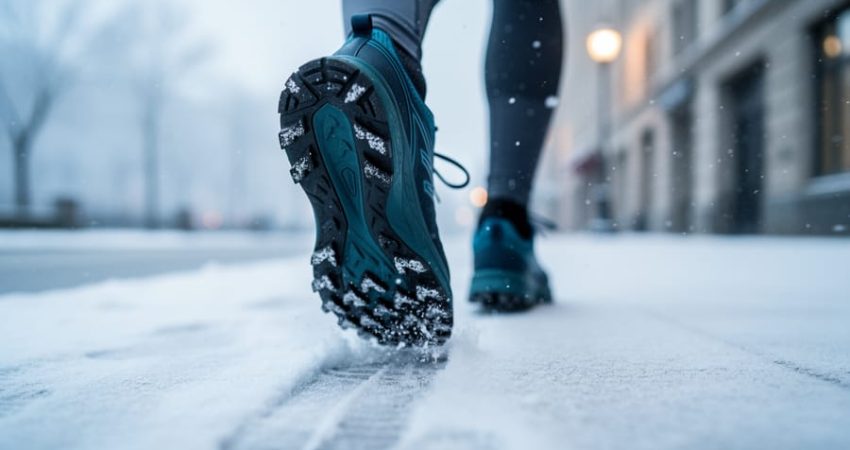
The best winter running shoes keep your feet dry, grip slick ground, and still feel comfortable mile after mile. For most runners, that means choosing a trail-style shoe with a waterproof liner, or one built for ice, and sizing it so you can wear a warmer sock. Spend ten minutes on that decision and you’ll spend the whole season running instead of making excuses.
In the interest of transparency, we earn a commission on some purchases made through links on this site. As an Amazon Associate I earn from qualifying purchases.
Cold mornings don’t have to end your routine. Plenty of runners tell us the hardest part of winter is simply getting out the door, and soaked, frozen feet make that worse. If dark starts are your struggle, our morning running tips can help you build a habit that sticks.
We’ve rounded up seven options for you to compare, including the Nike Women’s Air Zoom Pegasus 39 Shield the Brooks Men’s Divide 3 Trail Running Shoe the La Sportiva Mens Blizzard GTX Trail Running Shoes and the Saucony Womens Peregrine 11 St Trail Running Shoe. We’ll also cover the Inov-8 Mens Terraultra G 270 Trail Running Shoes the New Balance Mens DynaSoft Nitrel V6 Gore-Tex Trail Running Shoe and the ASICS Men’s Gel-Sonoma 8 Gore-Tex Trail Running Shoes. Below, you’ll find the key features to look for, a side-by-side comparison, common mistakes, and a simple step-by-step way to pick your pair. You’ve got this.
What to Look For in Shoes for Running in Winter
Water-Repellent vs. Waterproof: What’s the Difference?
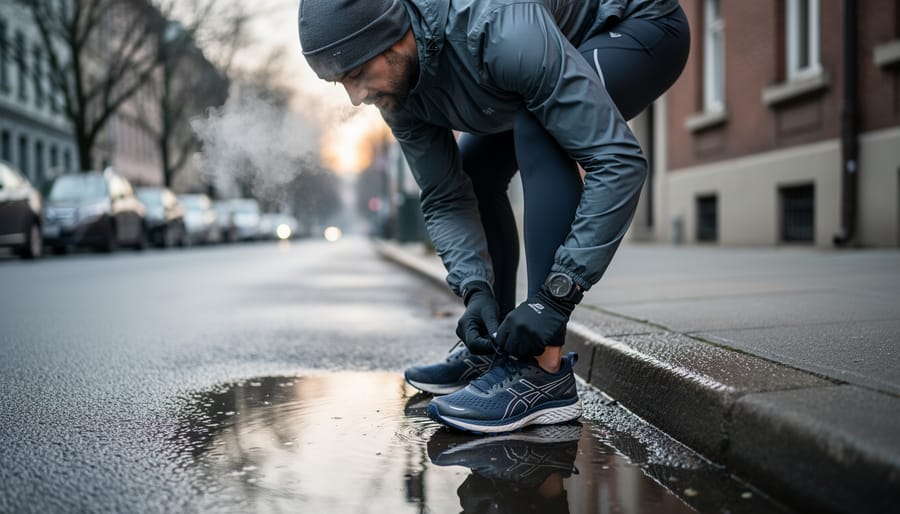
The difference comes down to how the shoe handles water. A water-repellent knit, like the one on the Nike Pegasus 39 Shield, sheds light moisture so your feet stay comfortable in drizzle, damp roads and slushy mornings. It’s built to keep the weather at bay without making the shoe feel heavy or stuffy.
A waterproof build goes a step further. The La Sportiva Blizzard GTX is made from GORE-TEX to provide durable, waterproof protection against the elements while you exercise, and GORE-TEX blocks water using a membrane layer rather than just a surface treatment. That makes it a smart choice when you expect puddles, wet snow or long stretches of soggy ground.
So when does each one make sense? If most of your winter miles are on cleared roads with the occasional wet patch, a water-repellent shoe is often plenty, and it keeps things simple. If you’re heading onto muddy trails or running in steady rain, a waterproof shoe gives you a bigger safety margin.
Here’s a friendly tip: think about your usual route first, then choose the level of protection. Starting with how and where you actually run makes the decision much easier, and you’ll feel more confident out the door.
Grip, Fit and Comfort for Cold-Weather Miles
Wet pavement and icy patches are where winter runs get risky, so grip deserves real attention. Look at the outsole and think about where you actually run. Packed trails and slushy sidewalks ask more of a shoe than a dry loop around the neighbourhood. Some picks, like the Saucony Peregrine 11 ST, are positioned for icy conditions, while the La Sportiva Blizzard GTX is the guide’s top spiked pick. Check each product page for the details on traction rather than assuming.
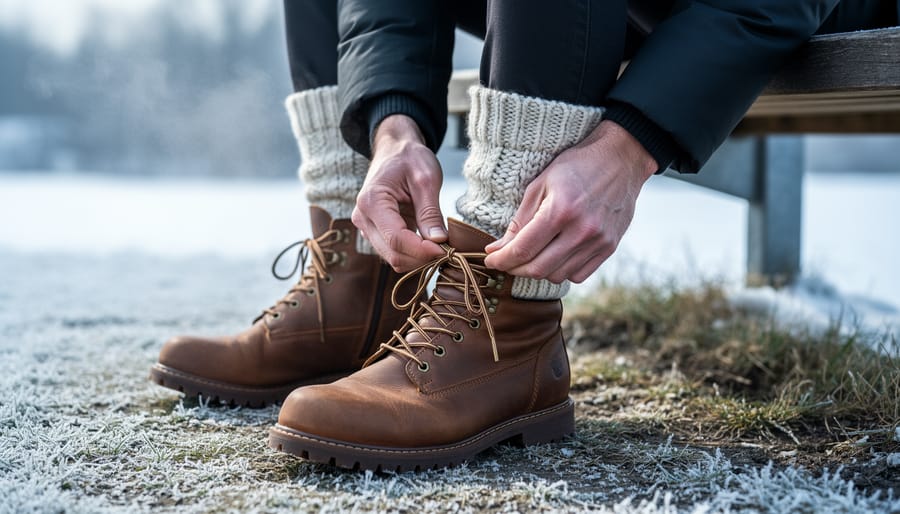
Fit changes in winter too. You’ll likely wear thicker socks, so try shoes on with the pair you plan to run in. You want room to wiggle your toes without your heel slipping. A shoe that feels snug in thin summer socks can pinch once you layer up, and numb toes are no fun at mile three.
Comfort is the quiet factor that ties it all together. Think about your usual distance. If you’re building endurance, a shoe like the Inov-8 TerraUltra G 270, listed as great for long distances, shows how comfort over time matters.
A friend of mine once bought a grippy pair she dreaded wearing, and they sat by the door all January. The best winter shoe is the one you actually look forward to lacing up, because that’s the one that gets you out running.
Road, Trail and Spiked: Types of Winter Running Shoes Compared
Not every winter shoe is built for the same job. Knowing the main types makes the picks later in this guide much easier to sort through, and it keeps you from buying a shoe that fights your usual route.
Weather-protected road shoes suit runners who stick to pavement and sidewalks. The Nike Pegasus 39 Shield, our best overall pick, is a good example of this approach. You get familiar road-shoe comfort with a layer of defence against damp, slushy days. The trade-off is that a road shoe isn’t designed for loose, muddy or snowy ground.
Trail shoes bring deeper lugs and a more rugged feel. They’re a natural fit if your winter miles include park paths, forest tracks or the occasional muddy shortcut. If you’re unsure how to choose trail shoes start by thinking about the surfaces you’ll actually run on most. Brooks Divide 3 and Inov-8 TerraUltra G 270 both sit in this category.
GORE-TEX trail shoes add a waterproof membrane to that trail foundation. They’re a smart match for soggy weeks when puddles and wet grass are unavoidable. The compromise is that a membrane can feel warmer and less airy on milder days.
Spiked and icy-condition options are for the slickest ground. La Sportiva Blizzard GTX is listed as a top spiked pick, and Saucony Peregrine 11 ST is the best choice for icy conditions in the guide we drew from. Check each product page for traction details before you buy.
| Shoe Type | Best Conditions | Main Strength | Trade-Off |
|---|---|---|---|
| Weather-protected road | Wet pavement and sidewalks | Everyday road comfort with weather defence | Less suited to snow or mud |
| Trail | Park paths and muddy tracks | Deeper lugs for rougher ground | Can feel heavier on pavement |
| GORE-TEX trail | Very wet, muddy routes | Durable waterproof protection | May feel warmer on mild days |
| Spiked / icy-condition | Icy, slick surfaces | Built with slippery ground in mind | Specialized, so less versatile |
Think of it this way: the best type is simply the one that matches your most common winter run. A beginner sticking to neighbourhood loops doesn’t need the same shoe as someone chasing icy trails at dawn, and that’s perfectly okay.
Our Recommendations: Winter Running Shoes at a Glance
Choosing between so many options is easier when you can see them side by side. We compiled these picks based on price, reviews and the unique features that make each pair suitable for winter, so you can match a shoe to your own routes and goals.
| Shoe | Category | Standout feature |
|---|---|---|
| Nike Pegasus 39 Shield | Best overall | Weather-ready road shoe |
| Brooks Divide 3 | Great budget choice | Affordable trail option |
| La Sportiva Blizzard GTX | Top spiked pick | GORE-TEX waterproof protection |
| Inov-8 TerraUltra G 270 | Great for long distances | Built for extended miles |
| Saucony Peregrine 11 ST | Best for icy conditions | Made for slick winter ground |
If you’re logging big weekend miles, it’s worth browsing a few dedicated long-distance shoes alongside the Inov-8 to see what feels right for you.
Beyond the five headline picks, three more options deserve a look. The New Balance and ASICS models both bring Gore-Tex protection to wet, muddy trails, while the Nike Pegasus Trail 5 GTX offers a full Gore-Tex upper for runners stepping off the pavement. Each gets its own review below, so you can see exactly who it suits.
Nike Women’s Air Zoom Pegasus 39 Shield: Best Overall for Winter Runs

The Nike Women’s Air Zoom Pegasus 39 Shield earns the best overall spot in this guide because it makes everyday winter running feel simple. Its water-repellent knit upper is built to shrug off the wet slush and drizzle that turn a normal run into a soggy one, and the lace-up closure lets you dial in a secure fit, even when you’ve layered on thicker socks.
This is a shoe for the runner who sticks mostly to roads, sidewalks and paved paths. If your cold-weather routine is a steady loop around the neighborhood before work, it fits that rhythm nicely. It’s also a friendly starting point if you’re new to winter running and don’t want to overthink gear. You get weather protection without stepping up to a full trail or waterproof-membrane shoe.
One runner I know put it this way: her first damp December morning used to mean cold, heavy feet by the second mile. Switching to a water-repellent shoe didn’t turn her into a speed demon, but it got her out the door on days she’d normally have skipped, and that’s the real win.
Customers currently rate it 4 out of 5, though that comes from just 4 ratings, so treat it as an early signal rather than a final verdict. Stock also looks tight, with only 3 left at the time of writing. If it catches your eye, it’s worth checking availability sooner rather than later and confirming your size on the product page.
Brooks Men’s Divide 3 Trail Running Shoe: A Great Budget Choice

Starting out with winter trail miles doesn’t have to mean a big spend, and that’s where the Brooks Men’s Divide 3 Trail Running Shoe earns its spot as our great budget choice. If you’re new to running when the weather turns cold, a shoe that does the basics well is exactly what you need while you build confidence on slushy paths and muddy tracks.
Brooks’ Divide line is aimed at runners who want to leave the pavement behind without committing to a specialist, high-end trail shoe. That makes the Divide 3 a friendly place to begin. You get a trail-ready shoe from a brand most runners already know, and you can put your attention on the part that matters most in winter: getting out the door consistently.
Customers have been positive about it. The Divide 3 holds a 4.5 out of 5 rating from 385 customer ratings, which is a healthy sample and a solid sign that plenty of runners are happy with what they bought. When a budget pick earns scores like that across hundreds of reviews, it tells you the shoe delivers on its promise rather than just looking good on a product page.
One practical note: at the time of our research, only 2 were left in stock, so if it sounds like your kind of shoe, don’t wait too long to decide.
This is a sensible pick for beginners, runners easing into trail routes, or anyone who wants a dependable second pair for rougher days. Check the product page for specifics on weather protection, then try them on with your thicker winter socks.
La Sportiva Mens Blizzard GTX Trail Running Shoes: Top Spiked Pick

If your winter route turns slick and wet, the La Sportiva Mens Blizzard GTX Trail Running Shoes are the pair this guide names as its top spiked pick. They’re the one to look at when conditions get properly nasty and you’d rather feel prepared than cautious.
The big draw is the GORE-TEX construction. The shoe is made from GORE-TEX to provide durable, waterproof protection against the elements while you exercise. For a cold-weather runner, that matters in a very practical way. Wet feet get cold fast, and cold feet make a run feel twice as long. A waterproof build helps keep slush, puddles and wet grass from turning a good morning into a miserable one.
Who benefits most? Trail runners who head out through damp, messy terrain all winter, and anyone who has cut a run short because their feet were soaked. If you’re newer to winter running, a waterproof shoe like this can be a real confidence booster. You spend less time worrying about the weather and more time enjoying the miles.
One thing to know: I’m not going to guess at the details of the spikes or the outsole pattern, since those specifics aren’t confirmed. Check the product page for what’s actually on the bottom of the shoe before you buy.
Reviewers like it, too. It holds a 4.4 out of 5 rating from 21 customer ratings, which is a solid showing. It usually ships within 4 to 5 days, so if you’re planning ahead for the first frost, order a little early rather than waiting for the cold snap to arrive.
Inov-8 Mens Terraultra G 270 Trail Running Shoes: Great for Long Distances

If you’re building endurance through the winter months, the Inov-8 Mens Terraultra G 270 Trail Running Shoes deserve a spot on your shortlist. The guide names this shoe as the pick that’s great for long distances, and the product itself is described as a zero drop shoe made for long distance ultra marathon running.
Think about who that suits. Maybe you started the autumn with a few easy loops and now you’re stretching your weekend run a little further each week. Longer efforts in cold weather ask a lot of your feet, and a shoe built with distance in mind can help you feel more settled as the minutes turn into hours. Zero drop simply means the heel and forefoot sit at the same height, which gives your stride a flatter, more natural feel. If you’re new to that style, ease in gently with shorter runs before committing to your longest outings.
Runners clearly have opinions on this one. It holds a customer rating of 4.4 out of 5 from 191 customer ratings, which is a healthy amount of feedback to lean on when you’re deciding. That kind of volume is reassuring if you like to read what other people think before you buy.
On the practical side, this shoe usually ships within 4 to 5 days. That’s worth planning around if you want it on your feet before your next big training block begins, so order a little ahead of when you need it.
Before you commit, check the product page for details on weather protection, since insulation and waterproofing vary from shoe to shoe. Pair it with the socks you plan to wear in winter, and enjoy those steady, confident long miles.
Saucony Womens Peregrine 11 St Trail Running Shoe: Best for Icy Conditions

If ice is the thing that worries you most about winter running, the Saucony Women’s Peregrine 11 ST is the shoe our guide points to. It earns the “best for icy conditions” label, and it’s a trail shoe, so it’s built with off-road running in mind rather than smooth pavement.
Here’s the reassuring part for newer runners: you don’t need to be an experienced trail athlete to benefit from a shoe like this. If your regular route turns slick and unpredictable from December through February, a trail-focused pair gives you a sturdier starting point than a standard road shoe. A friend of mine, a beginner who’d been skipping runs every time the sidewalks froze, told me she felt far more willing to head out once she switched to a trail shoe. Confidence matters as much as gear, and that mental lift keeps you moving.
Customers rate it 4.3 out of 5 from 127 ratings, which is a solid sign that plenty of runners have been happy with it. Keep in mind that stock looks limited right now, with only 4 left, so if it appeals to you, it’s worth checking sooner rather than later.
I’ll be upfront about one thing: I can’t give you specifics on the outsole pattern or any studded features, because those details aren’t confirmed. Check the product page for traction information before you commit, and try the shoe on with your usual winter socks.
This pick suits women who run on frozen paths, packed snow or uneven winter trails and want a shoe designed for tougher ground. Take your first run slowly, shorten your stride, and enjoy the crisp air.
New Balance Mens DynaSoft Nitrel V6 Gore-Tex Trail Running Shoe: A Waterproof Trail Option

When the trail turns to slush and mud, wet feet can end a run faster than cold legs ever will. That’s the problem the New Balance Mens DynaSoft Nitrel V6 Gore-Tex Trail Running Shoe is built to tackle. The Gore-Tex in its name signals a waterproof construction, designed to keep puddles, melting snow and sloppy ground from soaking through while you move.
This is a shoe for runners who spend their winter miles off the pavement. If your regular loop includes muddy singletrack, wet leaf litter or half-frozen paths, a waterproof trail shoe like this one is worth a look. It also suits anyone who has finished a cold, damp run with soggy socks and promised themselves never again. Staying dry makes a cold morning feel far more manageable, and that can be the difference between sticking with your routine and skipping it.
Reader feedback is encouraging. The shoe holds a customer rating of 4.2 out of 5 from 171 customer ratings, which is a solid sample for a trail shoe. It’s also listed as in stock, so you won’t be stuck waiting on a back order.
One honest note: a waterproof shoe isn’t the right call for every runner. If your winter routes are mostly dry roads, you may not need that extra protection. And as with any pair, check the product page for details on fit, outsole design and any temperature suitability, since those vary by shoe. Try it on with the thicker socks you’ll actually wear in January.
ASICS Men’s Gel-Sonoma 8 Gore-Tex Trail Running Shoes: Reliable in Wet Weather

When the forecast turns to slush and puddles, the ASICS Men’s Gel-Sonoma 8 Gore-Tex Trail Running Shoes are built for exactly that kind of morning. The Gore-Tex protection is the headline feature here, designed to keep water out so your feet stay drier on wet, muddy winter trails. If you’ve ever squelched through a soaked-sock run and decided never again, this is the kind of upper that speaks to that problem.
Who is it for? Think of the runner who loves heading off-road through winter but doesn’t want to turn back at the first stream crossing or sloppy patch of trail. It suits steady, everyday trail miles in unpredictable weather, and it’s a friendly option if you’re newer to trail running and simply want one reliable pair that copes when the ground is wet.
Shoppers seem to like it, too. It holds a customer rating of 4.4 out of 5 from 88 ratings, which is a solid vote of confidence from people who have actually laced it up. It’s also in stock right now, so there’s no waiting around if you want to get out before the next cold snap.
One honest note: waterproof protection is only part of the picture. Check the product page for details on grip and warmth, and remember to try the shoes on with your thicker winter socks so the fit feels comfortable. Get that right, and wet-weather miles can become some of your favourites.
Nike Pegasus Trail 5 GTX: A Full Gore-Tex Upper for Wet Trails
If you already run on roads and are curious about wet, muddy winter trails, the Nike Pegasus Trail 5 GTX is a natural bridge. The “GTX” in the name points to a full Gore-Tex upper, the same waterproof, breathable material family you’ll find on the La Sportiva Blizzard GTX and the other Gore-Tex picks in this guide. In practical terms, that means the shoe is built to keep water out when puddles, slush and soggy ground are part of the route.
Because the Pegasus name is familiar to many road runners, this is a comfortable shoe to consider if you’re nervous about making the switch to trails. You’re stepping into a style you may already recognize, with extra weather protection added for the season. That makes it a friendly option for beginners who want to try trail miles without feeling like they’ve left everything familiar behind.
How does it stack up against the other waterproof picks? The New Balance DynaSoft Nitrel V6 Gore-Tex and the ASICS Gel-Sonoma 8 Gore-Tex both share that waterproof angle, so the choice often comes down to fit, feel and how much you enjoy the look of the shoe. I’d suggest trying them on with your thicker winter socks and picking the one that feels most natural.
Whichever you choose, head out for a gentle first run and let your feet get used to the new setup. Wet trails are far more fun when your feet stay comfortable.
Common Mistakes to Avoid When Buying Winter Running Shoes
Most winter shoe regrets come down to a handful of avoidable slip-ups, and the good news is you can sidestep every one of them.
The big one is picking weather protection and forgetting about fit. A waterproof upper means little if your heel slips or your toes jam into the front. Comfort over your usual distance still comes first.
Grip is the next trap. Think about where you actually run. Wet pavement, muddy paths and icy lanes all ask different things of an outsole, so match the shoe to your surface rather than assuming any winter shoe will cope.
Sizing is another common stumble. Thicker socks take up room, and a shoe that felt perfect in a summer fitting can feel tight once your winter layers go on.
A few more to watch for: buying purely on looks, skipping reader reviews (they reveal how a shoe feels after weeks of real use, not just in the box), and expecting one pair to handle every condition. A road-style shoe with weather protection and a GORE-TEX trail shoe are built for different days, and that’s okay.
One runner I know, Dana, learned this the hard way. She grabbed a stylish pair on a whim, sized exactly as she did in July, and set off on her first frosty morning in thick wool socks. By mile two her toes were numb and cramped, and she turned back early. A quick try-on with her winter socks would have saved the whole run. Don’t worry, though. Every runner makes at least one of these mistakes, and now you know how to skip them.
Step by Step: Finding Your Perfect Winter Pair
Finding the right pair is easier when you take it one step at a time. Here’s a simple path that works whether this is your first winter run or your fiftieth.
1. Pick your main running surface. Think about where most of your miles happen: neighbourhood pavement, groomed paths or muddy trails. A road-style shoe like the Nike Pegasus 39 Shield suits pavement, while trail shoes make sense off-road.
2. Decide how much weather protection you need. A water-repellent knit handles light wet conditions. If you run through slush and puddles, a GORE-TEX build such as the La Sportiva Blizzard GTX is designed to give durable waterproof protection.
3. Check the grip. Match the shoe to the ground you’ll actually cover, and look at the outsole on each product page, since traction details vary by shoe.
4. Try on with winter socks. Wear the thicker pair you’ll run in, so your toes have room to move without the shoe feeling loose.
5. Compare reviews. Look at ratings and read what other runners say about fit and comfort in cold, wet weather.
6. Start with a gentle first run. Keep it short and easy so you can learn how the shoes feel, and avoid common pre-run mistakes like skipping your warm-up.
You’ve got this. A little preparation now means more comfortable miles all season.
Winter Running Shoe FAQs
Questions come up fast when the temperature drops, so here are straight answers to the ones runners ask most. Keep in mind that insulation ratings and traction details vary by shoe, so check each product page before you buy.
Do I need special shoes to run in winter?
Not always, but they help. Winter-ready shoes add weather protection or extra grip, which keeps your feet drier and steadier on slick ground. If your usual shoes feel fine on cold, dry days, you can keep wearing them until conditions turn wet or icy.
Are waterproof running shoes worth it?
If your winter runs are often wet, slushy or muddy, yes. A GORE-TEX build, like the one on the La Sportiva Blizzard GTX, is designed to give durable waterproof protection against the elements while you exercise. For mostly dry cold days, a water-repellent knit may be all you need.
Can I use trail shoes on roads in winter?
Many runners do, especially when sidewalks are wet or snowy and extra grip feels reassuring. Just ease into it and see how the shoe feels over your usual distance, since comfort is what keeps you running.
How should winter running shoes fit, and which suits icy conditions?
Try them on with your thicker winter socks so your toes have room without the shoe sliding around. For icy conditions, the Saucony Peregrine 11 ST is the guide’s pick for icy conditions, and the La Sportiva Blizzard GTX is its top spiked pick.
Once your shoes are sorted, remember that cold muscles like a little extra care. A few minutes of mobility for winter runs can help you feel looser before you head out the door. Start with an easy, short outing, enjoy the crisp air, and build from there.
Cold-weather running doesn’t have to be a grind. The right winter running shoes keep your feet drier, steadier and more comfortable, which makes it far easier to head out the door when the temperature drops.
Before you buy, run back through the basics. Think about how much water protection you need, whether a water-repellent knit will do or a GORE-TEX build makes more sense. Check that the grip suits the surfaces you actually run on, and make sure there’s room for thicker socks without the shoe feeling loose. Then lean on reviews and pick a pair you genuinely enjoy wearing, because that’s the one you’ll keep reaching for.
A good fit also helps you stay ahead of niggles. If something starts to feel off, it’s worth understanding foot pain causes and if the problem sits higher up, reading about top of foot pain can point you in the right direction.
You’ve got what you need. Lace up, start with an easy first run, and enjoy the quiet, crisp miles that winter has to offer.