A good pre-run yoga routine takes about 8 to 10 minutes, needs only a little floor space, and works for beginners and seasoned runners alike. The goal isn’t a deep stretch or a perfect pose. It’s to wake up the hips, calves, and hamstrings with gentle, flowing movement, so your first mile feels smoother and your body feels ready to go.
Think of it as a warm-up with a calmer pace. Instead of bouncing through static stretches or heading out the door cold, you move through a short sequence that links breath to motion and gives you a moment to check in with how your legs feel that day.
Plenty of runners describe the same pattern: the first ten minutes of a run feel stiff and awkward, and a few minutes of easy movement beforehand takes the edge off. Others simply like the mental reset, a quiet pause before the miles begin.
Below, you’ll find everything you need to start today: what to have on hand, when to stop, a step-by-step flow, and how to tell whether it’s working for you. No experience required, and no flexibility needed. You’ll finish feeling loose, focused, and ready to run.
Why Pre-Run Yoga Fits Into Your Pre-Run Routine
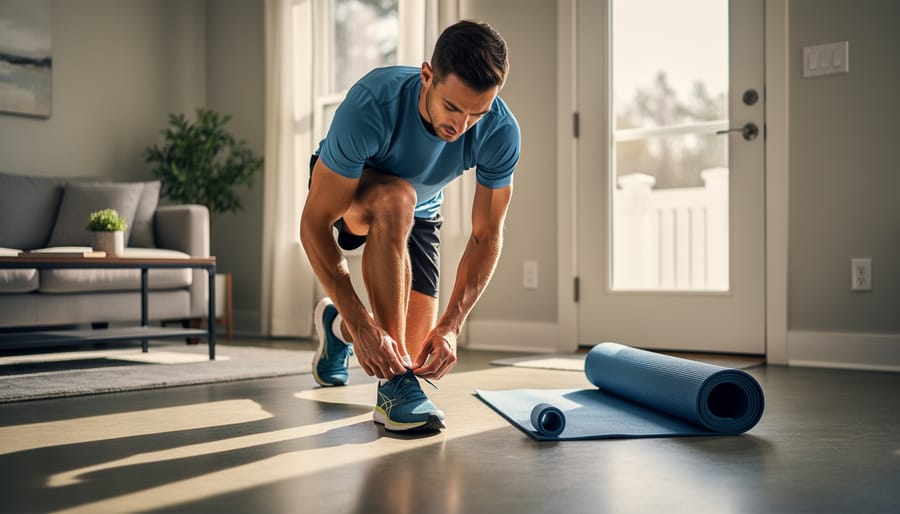
Where Yoga Fits in Your Pre-Run Timeline
Think of yoga as the bridge between getting ready and actually running. It works best once your body is awake but before you head out the door, which makes the order below easy to repeat. If you’re curious about building a broader habit, mobility workouts follow the same idea of moving through a range of motion rather than parking in it.
Here’s a simple timeline many runners find easy to stick with:
- Sip some water as soon as you wake up or about 30 minutes before heading out.
- Have a light snack if you need one, like a banana or a slice of toast.
- Flow through your 10-minute yoga routine on a mat or clear patch of floor.
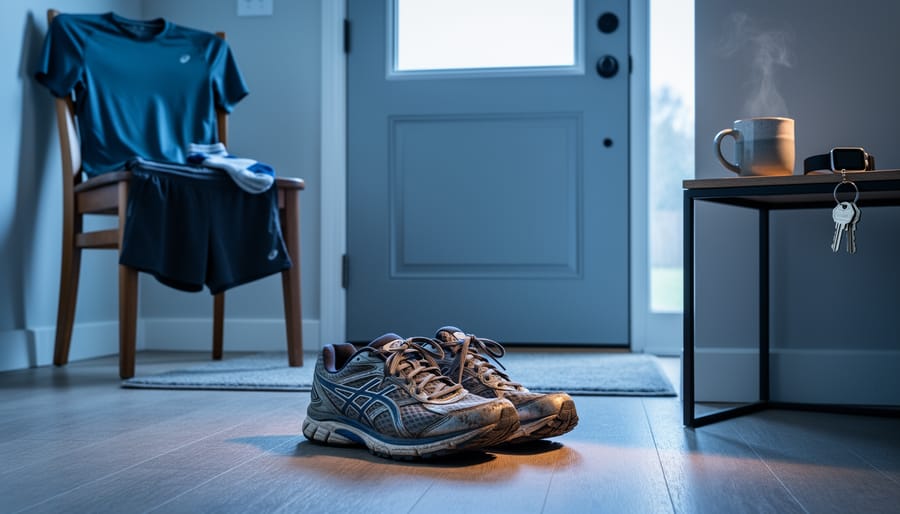
- Lace up and grab your watch, keys, and anything else you need.
- Start with an easy few minutes of running to settle into your pace.
Keep the poses flowing and save the long, deep holds for after your run, since experts suggest you avoid static holds before sprinting. Do it the same way each day, and it becomes second nature.
What You Need Before You Start: Tools and Space
The good news is that pre-run yoga asks for almost nothing. You don’t need a studio, fancy gear, or any yoga experience. A small patch of floor and a few everyday items will do the job.
Here’s a quick checklist to get you started:
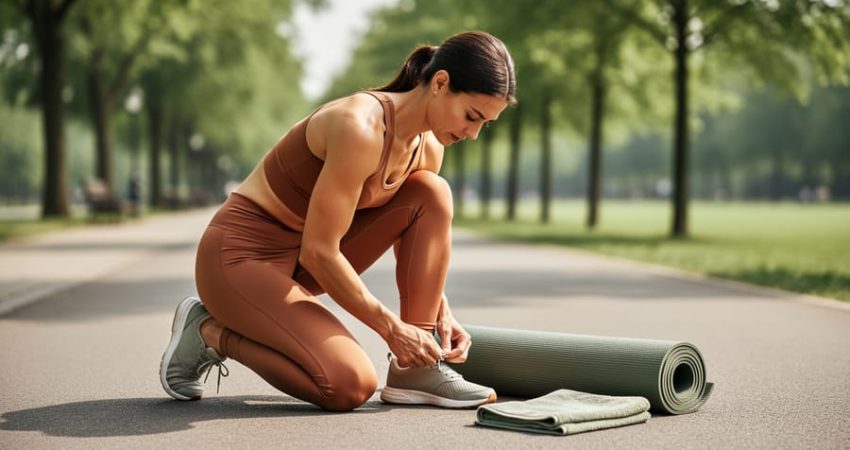
- A yoga mat or any non-slip surface, like a towel on a carpeted floor
- Comfortable clothing you can move freely in, ideally what you’ll run in
- Your running shoes within reach, so you can lace up right after
- A timer or watch to keep the flow to about 10 minutes
- A water bottle nearby for a quick sip before you head out
- Optional: a yoga strap or towel to make stretches more comfortable
For space, you only need enough room to stretch your arms out and step one foot forward into a lunge. A hallway, living room corner, or patch of driveway works nicely. Many runners do their flow right at the front door, which makes heading out feel effortless.
If you’re new to yoga, relax. Every move in this routine comes with a simple modification, so you can start exactly where you are.
Safety First: When to Modify or Skip a Pose
Yoga before a run should feel good, not like a test. The simplest rule: stay in a range where you can breathe smoothly and hold a conversation with yourself. If your breath gets choppy, you’ve gone a little too far, so ease back.
Keep every movement smooth and flowing. Skip the bouncing, and never force a stretch deeper than your body is ready to offer. Tight hamstrings? Soften your knees in the forward fold. Wrists feeling cranky in downward dog? Bend your knees, shorten your stance, or rest on your forearms. Can’t reach the floor in a low lunge? Rest your hands on a stack of books or place your back knee on the mat.
If you’re new to this, give yourself permission to do less. A smaller version of each pose still wakes up your body, and it builds a solid base for the stronger version later. Our guide of beginner exercise tips is a great companion if you’re building your foundation from scratch.
Dealing with an injury or a health condition? A quick chat with your doctor or physical therapist before adding this flow is a smart, confident move. Skipping a pose on any given day isn’t a setback. It’s you listening to your body, and that’s a real runner’s skill.
Your Step-by-Step 10-Minute Pre-Run Yoga Flow
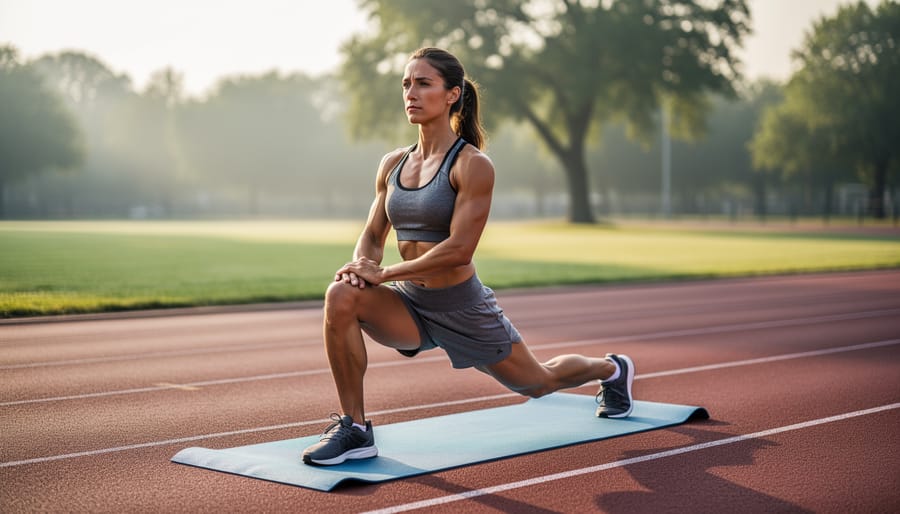
Start by Waking Up Your Spine and Breath
Begin on your mat on hands and knees, wrists under shoulders and knees under hips. Take a slow breath in through your nose, and let it fill your belly and ribs before you move at all. This small pause helps many runners shift out of “rushing to get out the door” mode and into “ready to run” mode.
Now flow into cat-cow for about eight slow breaths. Inhale as you drop your belly and lift your chest and tailbone, then exhale as you round your back toward the ceiling and tuck your chin. Let your breath set the pace, so each move lasts as long as each inhale or exhale.
If your wrists feel sensitive, come down onto your forearms or make gentle fists. Or skip the mat entirely and do the same movement seated in a chair. Finish with one big breath in and a long, easy sigh out.
Open the Hips, Hamstrings, and Calves
This middle stretch of your flow, about three to four minutes, speaks to the places most runners feel tight. The goal is to keep moving, so think gentle waves rather than long holds.
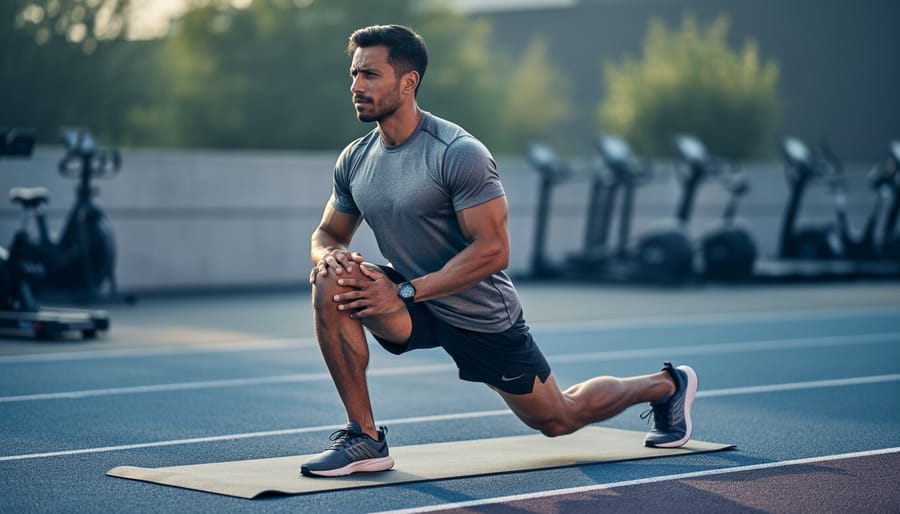
Step into a low lunge with your right foot forward and your back knee resting on the mat. Sink your hips forward for two slow breaths, then rock back toward your heel to ease the hamstring. Flow between the two for five or six breaths, then switch sides.
Next, press into downward dog. Bend one knee, then the other, pedaling your heels toward the floor to wake up your calves. If your hamstrings feel snug, keep both knees soft. That’s perfectly fine.
Finish with a standing forward fold, knees bent, swaying gently side to side. Let your head hang heavy and your breath do the work.
A quick tip: if you catch yourself bouncing or gripping, slow down and make the movement smaller. Smooth and comfortable always beats deep.
Finish With Standing Moves to Set Your Stride
Now bring it home with a few standing moves. Start with chair pose: feet hip-width apart, bend your knees, and sit your hips back as if easing into a seat. Keep your chest lifted and hold for about five slow breaths. If it feels intense, make the bend shallower. Chair pose gently wakes up your quads and glutes, the muscles that power your stride.
Next, step into mountain pose. Stand tall, feet grounded, arms relaxed at your sides. Take three steady breaths, in through your nose, out through your mouth. Feel your balance settle, then lace up and head out the door.
Make It Yours: Short-on-Time and Race-Day Variations
Short on time? A 5-minute express version still does the job. Pick four moves from the full flow: cat-cow for six slow breaths, a low lunge on each side, downward dog with a little calf pedaling, and a standing forward fold with soft knees. Finish with three steady breaths in mountain pose, and you’re ready to lace up.
You can also tune the flow to the run ahead:
– Easy runs: Keep everything slow and relaxed. Linger a little longer in the hip openers and let your breath set the pace.
– Speed days: Add a few extra rounds of chair pose and a moving lunge so your legs feel awake and springy.
– Long runs: Spend more time on calves and hamstrings, but keep the movement flowing instead of holding deep stretches.
One runner I know, a busy mom who runs before the kids wake up, used to skip warming up entirely. She started rolling out her mat while the coffee brewed and doing the express version, and she told me her first mile finally stopped feeling like a negotiation. If mornings are your challenge too, these morning running tips can help you build a routine that sticks.
Some days you’ll do the full 10 minutes, and some days just five. Both count, so do what fits and keep showing up.
How to Tell It’s Working and What to Try Next
Not sure the flow is paying off? Give it a couple of weeks and check in with yourself. Jot a quick note in a running journal or your watch’s notes after each run, and look for patterns rather than one-off verdicts. A few simple self-checks:
- How your first mile feels: smoother and easier than it used to, or still stiff?
- How loose your hips and calves feel as you get moving.
- How consistent you’ve been, since a gentle flow done often usually beats a perfect one done rarely.
- How calm and focused you feel standing at the start line.
Some days will feel better than others, and that’s completely normal. Sleep, stress, and that extra coffee all play a part, so treat these notes as clues, not a scorecard. Many runners find the small wins show up first in how ready they feel, not in a dramatic change overnight.
Once the routine feels like second nature, there are easy ways to build on it. Try a short post-run stretch to hold the deeper poses you skipped beforehand. Add a little strength for runners a couple of times a week to support your stride. If the flow leaves you restless, shift it earlier or later in your pre-run timeline and see what feels best. Keep experimenting, and keep it fun.
Pre-Run Yoga FAQs
Still have a few questions before you roll out your mat? You’re not alone. Here are the ones runners ask most often.
Should I do yoga before or after running?
Both can work, just in different styles. Save the flowing, gentle moves for before your run, and keep the long, deep holds for afterward when your muscles are warm.
How long should pre-run yoga take, and can beginners do it?
About 10 minutes is a great target, or 5 if your morning is tight. Beginners are absolutely welcome: every move has an easy modification, and no prior yoga experience is needed.
Is it okay to skip static stretching before a run?
Many runners find that flowing, movement-based yoga feels better before a run than long static holds. If long holds feel good to you, try them after your run instead.
What if I’m sore or tight that day?
Keep every move smaller and slower, bend your knees a little more, and stay within a comfortable range. If something feels sharp or painful, skip that pose and check in with a healthcare professional if it sticks around.
The best routine is the one you’ll actually do. Start small, stay curious about how your body feels, and let the flow adjust to you rather than the other way around.
You now have a simple, repeatable flow: wake up your spine, open your hips, hamstrings, and calves, then finish with a few standing moves and steady breaths. Ten minutes is all it takes, and on rushed mornings, five still counts. Paired with a light snack, a few sips of water, and shoes laced and ready, it turns a scattered start into a calm, confident one.
Try it before your next run and notice how that first mile feels. Small habits add up, and you’re already building one. Come back and tell us how it went.