
If your foot hurts after a run, the most common culprit is plantar fasciitis, an inflammation of the thick band of tissue running along your arch. Press your thumb firmly into the bottom of your foot near the heel. Sharp pain there, especially if it’s worse first thing in the morning? That’s your likely diagnosis, and you can start treating it today.
But foot pain isn’t one-size-fits-all. Runners deal with everything from stress fractures to nerve compression, and knowing the difference between “rest a few days” and “see a doctor now” can save you months of frustration. Most runner foot pain responds well to a combination of rest, ice, stretching, and smart training adjustments. The key is matching your symptoms to the right fix.
Here’s what you need to know: about 70% of running-related foot pain stems from overuse, not a single dramatic injury. You ramped up mileage too quickly, your shoes have lost their cushioning, or your running form is putting excess stress on vulnerable structures. The good news? These problems are fixable without giving up running entirely.
This guide walks you through the detective work. You’ll learn how to identify what’s actually hurting, understand why it happened, and follow a step-by-step protocol to get back on the road. We’ll cover when home treatment is enough and when you need professional eyes on the problem. If the pain is severe, you can’t bear weight, or you see visible swelling and bruising, skip the self-diagnosis and get to a sports medicine doctor or podiatrist today. For everyone else, let’s solve this together.
Identifying Your Foot Pain: What’s Actually Hurting?
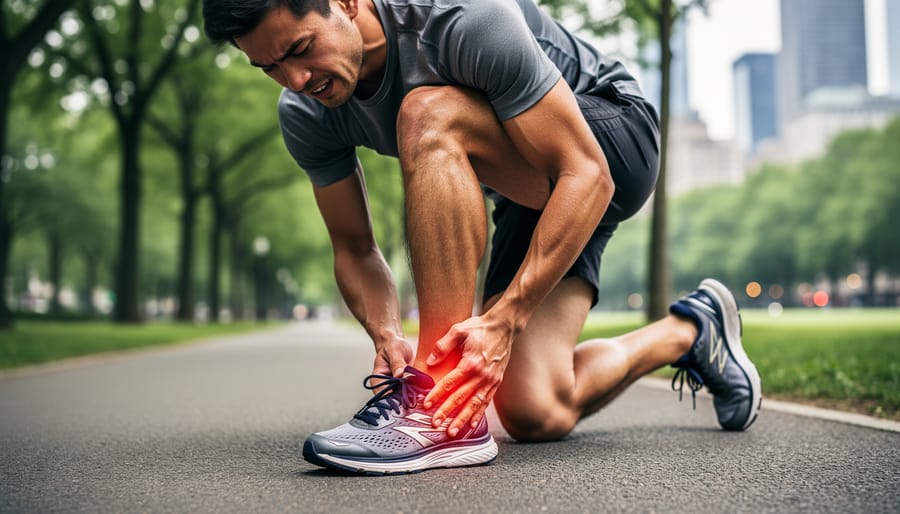
Before you can fix your foot pain, you need to know what’s actually hurting. That might sound obvious, but many runners struggle to describe their discomfort beyond “my foot hurts when I run.” Getting specific about your pain location and type is the first step toward finding the right solution.
Start by identifying exactly where the pain lives. Is it in your heel? Your arch? The ball of your foot? Between your toes? On top of your foot? Each location points toward different conditions. When you notice pain during or after a run, stop and take a mental snapshot: which part of your foot is screaming at you?
Next, pay attention to the quality of the pain. Sharp, stabbing pain feels completely different from a dull ache, and that difference matters for diagnosis. Burning sensations suggest nerve involvement, while throbbing often indicates inflammation. A deep, bone-level ache might mean something more serious than surface-level soreness.
Timing tells you a lot too. Does the pain strike first thing in the morning when you step out of bed? Does it build gradually during your run, or hit suddenly? Does it fade with movement or get worse? Morning pain that improves as you warm up has a different source than pain that intensifies with every mile.
| Pain Location | Common Sensation | Likely Condition |
|---|---|---|
| Heel (bottom) | Sharp, especially mornings | Plantar Fasciitis |
| Arch | Dull ache or tightness | Plantar Fasciitis or Flat Feet |
| Ball of foot | Burning or sharp pain | Metatarsalgia |
| Between toes | Burning, tingling, numbness | Morton’s Neuroma |
| Back of heel | Stiffness, tenderness | Achilles Tendinitis |
| Top of foot or midfoot | Deep, localized ache | Stress Fracture |
Consider how the pain responds to pressure. Press gently on the sore area with your thumb. Does a specific spot feel tender when you push on it, or is the pain more diffuse? Can you recreate the sensation by flexing your foot or standing on your toes?
Write down your observations or take notes on your phone right after a painful run. Memory fades quickly, and these details will help you track patterns. Did yesterday’s five-miler hurt differently than today’s easy three? Those patterns reveal whether you’re dealing with an acute injury or a chronic condition that needs addressing.
The Most Common Causes of Foot Pain in Runners
Plantar Fasciitis: The Classic Heel and Arch Pain
Plantar fasciitis strikes when the thick band of tissue running along your foot’s bottom becomes inflamed and angry. This tissue, your plantar fascia, acts like a shock-absorbing bowstring, supporting your arch with every stride. Runners overload it through repetitive pounding, especially when ramping up mileage too quickly or switching to harder surfaces without adaptation.
The telltale sign? Stabbing pain in your heel or arch that’s worst with those first steps out of bed. After sitting for a while, standing up feels like stepping on broken glass. The pain often eases as you move around and the fascia warms up, only to return after your run or at day’s end when inflammation builds.
Tight calves contribute significantly, they pull on the Achilles tendon, which connects to the plantar fascia, creating a chain reaction of tension. Runners with high arches or flat feet face higher risk because their foot mechanics put extra stress on the fascia. Old or unsupportive shoes compound the problem by failing to cushion impact properly.
Left untreated, plantar fasciitis can sideline you for months.
Stress Fractures: When Overtraining Breaks Down Bone
Stress fractures are hairline cracks in the small bones of your foot, usually the metatarsals or heel, that develop when the cumulative impact of running outpaces your bone’s ability to repair itself. Unlike sudden injuries, these develop gradually, often when you’ve ramped up mileage too quickly, added intense speed work without adequate rest, or run through existing discomfort.
The telltale sign is pinpoint pain that worsens during your run and throbs afterward, often accompanied by swelling or tenderness when you press on the spot. Early on, you might feel a dull ache that disappears when you stop running, which makes it tempting to push through. Don’t. Ignoring a stress fracture transforms a two-week recovery into a two-month ordeal, or worse, a complete break that sidelines you for months.
If you suspect a stress fracture, stop running immediately. The bone needs rest to heal, and continuing to pound on it prevents that repair process. You’ll likely need imaging to confirm the diagnosis, since stress fractures don’t always show up on initial X-rays. Catching it early means you can return to running sooner and stronger.
Metatarsalgia: Pain in the Ball of Your Foot
Metatarsalgia sounds complicated, but it’s simply inflammation and pain in the ball of your foot, where your toes connect to the rest of your foot. If you feel sharp, aching, or burning pain in this area during or after running, especially when you push off, you’ve likely got it.
This condition often develops from repetitive high-impact forces during running. Every time your foot strikes the ground, your metatarsal heads (the bones behind your toes) absorb significant pressure. When that pressure exceeds what your foot can handle, inflammation sets in.
Several factors make metatarsalgia more likely. Running in shoes with thin cushioning or worn-out midsoles fails to protect the ball of your foot. High-intensity workouts like sprints and hill repeats increase forefoot loading. Tight calf muscles force more pressure onto the front of your foot. Even your foot shape matters: high arches or a second toe longer than your big toe can redistribute pressure unevenly.
The pain typically worsens when walking barefoot on hard surfaces or wearing unsupportive shoes. You might feel like you’re walking on pebbles or that your sock is bunched under your foot.
Morton’s Neuroma: The Burning Between Your Toes
Morton’s neuroma happens when the nerve tissue between your toes (usually the third and fourth) thickens and becomes inflamed. Runners experience this as a sharp burning sensation, numbness, or the feeling that you’re standing on a pebble inside your shoe.
The condition develops from repetitive compression and irritation of the nerve. Tight shoes with a narrow toe box are a primary culprit, squeezing your forefoot with every step. Add thousands of repetitive impacts during a run, and that nerve tissue gets angry.
You might notice the pain worsens as your run progresses, or feel relief when you remove your shoes and massage your toes. Some runners describe tingling or the sensation that their sock is bunched up, even when it isn’t.
Unlike other running injuries, Morton’s neuroma often improves quickly with wider shoes, lower heels, and metatarsal pads that reduce pressure on the nerve. Ignoring it can lead to permanent nerve damage, so address it early.
Achilles Tendinitis: When the Pain Creeps Up From Your Heel
Achilles tendinitis develops when the thick cord connecting your calf muscles to your heel bone becomes inflamed from repetitive stress. You’ll typically feel a dull ache or stiffness along the back of your ankle, especially noticeable first thing in the morning or at the start of a run. The pain often eases as you warm up, only to return worse afterward.
This condition sneaks up on runners who increase mileage too quickly, add aggressive hill work without proper conditioning, or have tight calf muscles that put constant tension on the tendon. You might notice the area feels tender to touch or slightly swollen. Some runners describe a creaking sensation when moving the ankle.
Left unaddressed, tendinitis can progress to more serious tendon damage. The good news? Catching it early and backing off intensity while incorporating calf stretches and eccentric strengthening exercises usually resolves the issue within weeks.
Poor Footwear and Worn-Out Shoes
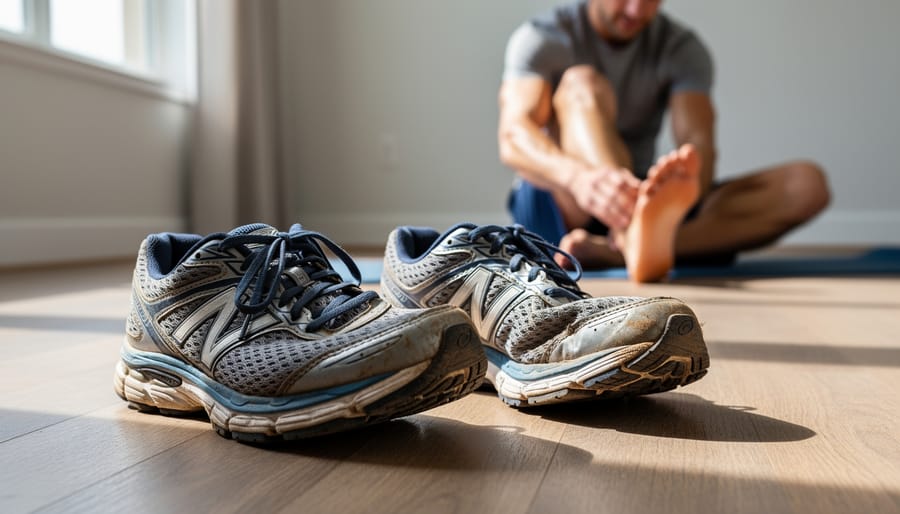
Your shoes might be the simplest explanation for your foot pain, and the easiest fix. Running shoes lose their cushioning and support after 300-500 miles, which happens faster than most runners realize. Once the midsole foam compresses, your feet absorb more impact with every stride, straining the plantar fascia, metatarsals, and heel.
Shoes that don’t match your foot shape create problems too. Narrow toe boxes squeeze toes together, potentially causing neuromas. Insufficient arch support lets your foot collapse inward with each step, stressing the fascia. Even brand-new shoes cause pain if they’re the wrong type for your gait pattern or running style.
Track your shoe mileage and replace them regularly, even if they look fine on the outside.
How to Fix Your Foot Pain: Step-by-Step Solutions
Immediate Relief: What to Do Right Now
The moment you feel foot pain during a run, stop. Yes, immediately. Walking it off or pushing through isn’t brave, it’s how minor issues become major injuries that sideline you for months.
Once you’re home, start with ice. Apply it for 15 minutes every two to three hours for the first 48 hours. Use a bag of frozen peas or fill a paper cup with water, freeze it, and peel back the cup to massage the sore area. The cold reduces inflammation and numbs sharp pain.
Elevate your foot above heart level while you ice. Prop it on pillows when you’re sitting or lying down. This helps reduce swelling by improving circulation and preventing fluid buildup in the injured tissue.
Compression comes next. Wrap your foot with an elastic bandage, starting at your toes and working toward your ankle. Keep it snug but not tight, you should still be able to wiggle your toes, and your skin shouldn’t turn purple or go numb.
For pain management, over-the-counter anti-inflammatory medication like ibuprofen can help, but don’t use it to mask pain so you can keep running. The pain is information your body needs you to hear.
Rest means actual rest. Skip your next few runs. I know it’s frustrating, but two or three days off now beats two or three months off later. The fastest path back to running is giving your foot time to heal right now.
Stretches and Exercises That Actually Help
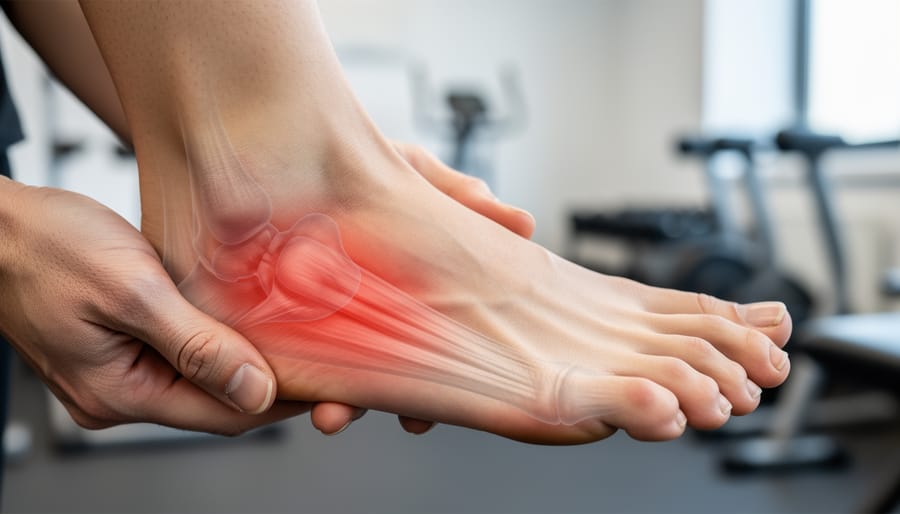
The right stretches and exercises can dramatically speed your recovery and prevent future issues. Incorporating targeted mobility workouts into your routine addresses the root causes of foot pain rather than just masking symptoms.
Start each morning with plantar fascia stretches before you even get out of bed. Sit with one leg crossed over the other, pull your toes back toward your shin until you feel tension along the bottom of your foot, and hold for 30 seconds. Repeat three times per foot. This simple move reduces that brutal first-step pain many runners experience.
Calf stretches are equally critical since tight calves pull on the plantar fascia and Achilles. Face a wall, place one foot behind you with the heel down and knee straight, lean forward until you feel a stretch in the back of your leg. Hold 30 seconds, then repeat with a slightly bent knee to target the deeper soleus muscle. Do this twice daily for both legs.
Toe curls and marble pickups build stronger feet from the inside out. Spread a small towel on the floor and use your toes to scrunch it toward you, or pick up marbles and drop them in a cup. These exercises strengthen the intrinsic foot muscles that support your arch and absorb impact.
For active recovery, roll the bottom of your foot over a frozen water bottle for five minutes. This combines gentle stretching with inflammation control. You can do this while watching TV or working at your desk.
Consistency matters more than intensity. Five minutes twice daily beats an occasional marathon stretch session, and you’ll notice improvement within two weeks.
Getting the Right Shoes and Orthotics
Your shoes are the foundation of pain-free running, and getting them right matters more than most runners realize. If you’re experiencing foot pain, your footwear deserves a hard look.
Start by getting a professional gait analysis at a specialty running store. They’ll watch you run and identify whether you overpronate, supinate, or have a neutral stride. This isn’t marketing hype, it genuinely helps match you to shoes that support your specific biomechanics. Don’t guess at your foot type or buy shoes just because they look good or your friend loves them.
Replace your running shoes every 300 to 500 miles, even if they look fine externally. The midsole cushioning breaks down with repeated impact, and worn-out shoes are a direct path to foot pain. Track your mileage in a running log or app, and mark your calendar for replacement.
For orthotics, start with over-the-counter arch supports from a running store. Brands like Superfeet or Powerstep work well for many runners and cost a fraction of custom orthotics. They provide structured arch support and can relieve plantar fasciitis and metatarsalgia.
Custom orthotics from a podiatrist make sense if you have significant biomechanical issues, severe pain that doesn’t respond to other treatments, or structural foot abnormalities. They’re expensive but can be game-changing for chronic problems. Your doctor or physical therapist can help you decide if they’re necessary for your situation.
When to See a Doctor or Physical Therapist
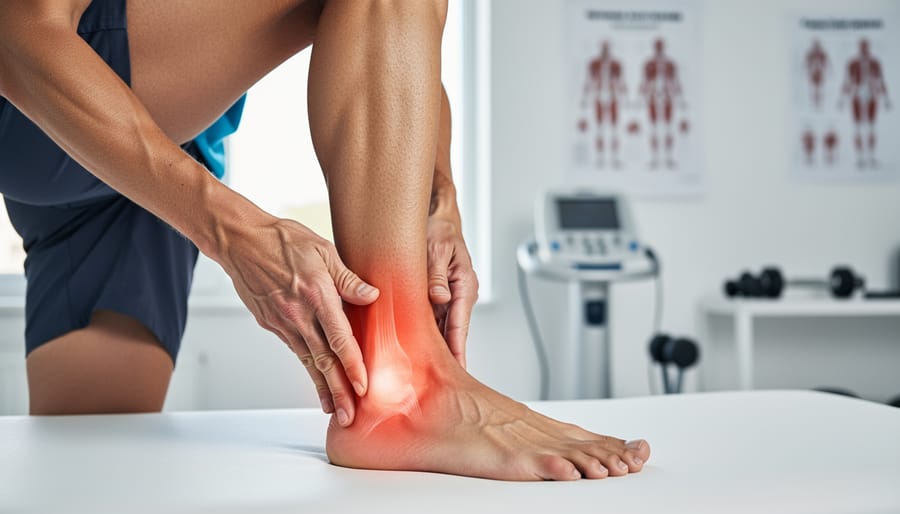
Most foot pain responds to rest and home care, but some situations absolutely require professional eyes on the problem. Knowing when to push through (never), when to try self-care first, and when to schedule an appointment can save you weeks of frustration and prevent a minor issue from becoming a major injury.
Beyond those urgent red flags, certain patterns tell you it’s time for professional help. If your pain consistently worsens during runs rather than improving after the first mile, that’s your body saying something’s structurally wrong. Pain that interferes with daily walking, not just running, needs evaluation. When you can pinpoint the exact spot of sharp, localized pain (especially if pressing on it makes you wince), you might be dealing with a stress fracture or tendon injury that requires imaging.
Physical therapists shine when you’ve got recurring pain that keeps coming back despite trying different shoes, rest periods, and stretches. They’ll assess your running form, identify muscle imbalances, and create a targeted strengthening program. A PT can also determine whether your pain stems from your feet or originates higher up in your kinetic chain, tight hips or weak glutes often masquerade as foot problems.
Don’t wait until you’re completely sidelined. Catching issues early means faster recovery and less time away from running. If you’ve rested for two weeks, iced religiously, and still feel significant pain when you test a short run, that’s your signal. A sports medicine doctor or physical therapist familiar with runners will understand your goals and work with you to get back on the road safely, not just tell you to stop running forever.
Preventing Foot Pain Before It Starts
You already know foot pain is a pain, why not stop it before it starts? Prevention isn’t glamorous, but it beats limping through the last mile of a run you were loving. The good news: most foot pain is avoidable with a few smart habits built into your training routine.
Start by respecting the 10% rule. This classic guideline says don’t increase your weekly mileage by more than 10% from one week to the next. It sounds conservative, but your feet handle enormous impact forces with every stride, and they need time to adapt to new demands. Jumping from 15 miles a week to 25 because you’re feeling strong is a fast track to stress fractures and tendinitis. Slow and steady wins the race, and keeps your feet happy.
Your warm-up and cool-down matter more than you think. Before you run, spend five minutes walking briskly or jogging slowly to get blood flowing to your feet and lower legs. After your run, don’t just collapse on the couch. Walk for a few minutes, then do some gentle calf and foot stretches. This simple routine reduces stiffness and helps your muscles recover properly.
Here are core prevention strategies that work:
- Follow the 10% rule for weekly mileage increases to avoid overloading your feet
- Rotate between two pairs of running shoes to extend their life and vary stress patterns
- Schedule at least one full rest day per week for tissue repair
- Vary running surfaces, mix pavement, trails, and tracks to distribute impact differently
- Focus on proper running form with midfoot landing and quick cadence
- Strengthen feet and ankles with exercises like toe curls, calf raises, and balance work
Don’t underestimate the power of strength training. Strong glutes, quads, and core muscles stabilize your entire kinetic chain, reducing the load on your feet. Weak hips or ankles force your feet to compensate, creating uneven pressure and inflammation. Two or three strength sessions weekly can dramatically cut your injury risk.
Pay attention to surfaces, too. Running exclusively on concrete is brutal on your feet. Mix in softer trails or grass when possible, or at least alternate between different road surfaces. Your feet will thank you for the variety.
Finally, check out these exercise tips if you’re new to running or ramping up after time off. Building a solid foundation prevents the missteps that lead to foot pain down the road. Prevention takes discipline, but it’s infinitely easier than fixing an injury that sidelines you for weeks.
Common Questions About Foot Pain in Runners
Can I run through foot pain?
If the pain is mild and doesn’t worsen during your run, you might be okay to continue with reduced mileage and intensity. However, sharp pain, pain that intensifies as you run, or discomfort that changes your gait means you should stop immediately to prevent turning a minor issue into a serious injury.
How long does plantar fasciitis take to heal?
Most runners see significant improvement within six to twelve weeks with consistent treatment including stretching, proper footwear, and modified training. Severe cases can take six months or longer, especially if you ignore the problem and continue running through pain.
Do compression socks help with foot pain?
Compression socks can reduce swelling and improve circulation, which may help with recovery between runs. They won’t fix the underlying cause of your foot pain, but many runners find they provide noticeable relief when worn after hard workouts or races.
Should I ice or heat my foot pain?
Ice is your go-to for acute injuries and inflammation, use it for 15 to 20 minutes immediately after running or when you notice swelling. Heat works better for chronic stiffness and tight muscles, particularly before stretching, but avoid heat on fresh injuries or inflamed tissue.
Will losing weight reduce my foot pain?
Yes, carrying less weight means less impact force on your feet with every stride. If you’re overweight, learning how to lose fat as a runner through proper nutrition while maintaining your training can significantly decrease stress on your feet, ankles, and knees.
Is barefoot running better for preventing foot pain?
Barefoot running strengthens foot muscles and can improve your natural gait, but transitioning too quickly often causes more foot pain, not less. If you’re curious about minimalist running, start with short distances on soft surfaces and build up gradually over months, not weeks.
These questions come up constantly in running forums and at physical therapy clinics because foot pain creates so much confusion and contradictory advice. The truth is that most answers depend on your specific situation, your current fitness level, and what’s actually causing your discomfort.
One question worth addressing separately is whether you need expensive custom orthotics or if drugstore inserts will do the job. Custom orthotics cost hundreds of dollars and require a professional fitting, but they’re precisely molded to your unique foot structure and biomechanics. Over-the-counter inserts run twenty to sixty dollars and work well for many runners, especially those with common issues like mild overpronation or general arch support needs. Start with quality off-the-shelf options and see if they solve your problem before investing in custom work.
Another concern runners raise is whether their running surface matters for foot pain. It absolutely does. Concrete sidewalks transmit the most impact force to your feet, while dirt trails, grass, and synthetic tracks offer more cushioning. If you’re dealing with active foot pain, shifting your runs to softer surfaces during recovery can make a real difference in how quickly you heal and how comfortable your runs feel.
Key Terms Every Runner Should Know
Understanding the language around foot pain helps you describe your symptoms more accurately to doctors and physical therapists, and makes sense of their recommendations. Here are the essential terms that come up when discussing running-related foot pain:
- Pronation
- The natural inward roll of your foot after your heel strikes the ground, which helps absorb shock during running. Some pronation is normal and necessary for proper cushioning.
- Overpronation
- Excessive inward rolling of the foot that can strain the arch and lead to plantar fasciitis, shin splints, and knee pain. Runners with flat feet often overpronate.
- Supination
- The outward roll of the foot during running, which is less common than pronation. Excessive supination (also called underpronation) can lead to stress fractures because it reduces shock absorption.
- Plantar Fascia
- The thick band of tissue running along the bottom of your foot from heel to toes that supports your arch. When this tissue becomes inflamed, it causes plantar fasciitis.
- Metatarsals
- The five long bones in the middle of your foot between your ankle and toes. These bones take significant impact during running and are common sites for stress fractures and pain in the ball of the foot.
- Gait Cycle
- The complete sequence of movements your foot makes from initial heel strike through toe-off. Analyzing your gait helps identify mechanical issues that contribute to foot pain.
Knowing these terms transforms vague complaints like “my foot hurts when I run” into specific descriptions like “I have pain in my metatarsals that gets worse during the toe-off phase of my gait.” That specificity helps healthcare providers diagnose your issue faster and recommend the right treatment. You don’t need to memorize medical terminology, but understanding these basics makes you a more informed advocate for your own foot health.
Foot pain doesn’t have to be the end of your running story. The truth is, most foot pain in runners is completely fixable when you take the right steps early. Whether it’s investing in proper footwear, adjusting your training plan, or committing to consistent strengthening exercises, the solution is within your control. Ignoring the pain and pushing through rarely works. It usually just extends your recovery time and turns a minor issue into something that sidelines you for months.
Take Sarah, a recreational runner who couldn’t make it past three miles without debilitating arch pain. She’d pushed through for months, convinced rest days made her weak. Finally, she replaced her two-year-old shoes, started doing calf stretches daily, and cut her weekly mileage by 30 percent. Within six weeks, she was back to her usual routes. Three months later, she ran her first half-marathon completely pain-free. Her story isn’t unique. Thousands of runners recover from foot pain every year by making smart, evidence-based changes.
Your feet carry you through every mile. They deserve your attention and care. Start today with one small change, whether that’s scheduling a shoe fitting, trying the stretches from this article, or finally booking that appointment with a physical therapist. Pain-free running isn’t just possible. It’s waiting for you on the other side of taking action.